Content warning: This is a post about eating disorders, with a brief mention of hospitalization, miscarriage, and the death of a child.
It’s National Eating Disorders Awareness Week.
I’ve known about this week for over two years now and have let it go by unmarked, quietly watching people I love and admire talk about the way their eating disorder has shown up this year: their progress and backslides, their trips to the hospital or other treatment centers, their success at finishing three meals a day (hell, even one meal a day) or finding nutrition that works for them, their pride at surviving.
Because taking on an eating disorder is about survival. It’s about facing the cruel, small voice that whispers to you constantly every day — all while navigating social media full of weight loss tips and diets and before + after photos and ads designed to manipulate you into caving in — and telling it no. Telling it to stop. Telling it you care more about your life than its definition of safety, or happiness, or normalcy.
I started to write this post on Instagram almost a month ago, and I ran out of characters. I wanted to show you pictures of my new purple hair, and tell you why I was so excited about that. Without intending to, I started talking about what it means to me to have my hair back. It quickly became clear that what I had to say was more than an Instagram caption. It was more than just one post.

The idea and name for this project formed organically in the space of about an hour. I got a website domain and decided to take on the work I’ve slowly been doing on social media, especially over the past year, in a more formal capacity. I’ll talk more later about what box of darkness means to me, and why I’m doing it, but let me get to the point of this inaugural post: For many years, I have struggled with anorexia.
This is very likely not a surprise to the vast majority of folks who have known me for years. I’ve hinted at it in social media posts; I’ve spoken frankly about the way my dramatic weight loss several years ago was met with congratulations when it was really a sign of my spiral into illness. Multiple people who are close to me already are aware that anorexia is what led to my hospitalization for the first half of 2019 and have been fierce supporters of my recovery for years now, whether we talk about it in specifics or not.
But to say the words “anorexia” or “eating disorder”? I’m not sure why, but it’s always felt difficult to me — more difficult than talking about depression or PTSD, that’s for sure. To be fair, I’ve had far more time to get used to those diagnoses and what they mean for me and my life, to work through shame and cultural stigma. Anorexia is different, though.
It’s incredible how little I knew about eating disorders before a professional told me I had one. I say this as someone who considered myself particularly well-informed. Even so, when I was working through my challenges with food and eating, I could hardly admit what was readily apparent to just about everyone in my life, mostly due to this internalized stigma: “Eating disorders are shameful.”
The picture in my head — particularly of anorexia — was one fueled by movies and TV and media and mean whispers during high school about girls who were clearly anorexic and therefore, somehow bad. For many years, I never thought those girls could be me.
When I was diagnosed in 2018, and especially after my outpatient team put their collective feet down and sent me to treatment in 2019, all of my internalized stigma and stereotypes shattered.
Did you know many men suffer from eating disorders, at increasingly high numbers? Did you know they struggle to find treatment centers who will take them, since many places hold to the stereotype that EDs are a “women’s issue”? While less than 1% of eating disorder research focuses on them, the National Association for Males with Eating Disorders estimates that 25-40% of people with eating disorders are men.
Did you know eating disorders aren’t really about weight and food? They’re more in line with disorders like self-harm, OCD, and substance abuse — coping mechanisms with hyper-focus and compulsions. Certainly, societal expectations about what people (especially AFAB people) are “supposed” to look like contribute — possibly even significantly — but they aren’t the entirety of what drives an eating disorder.
I didn’t know any of these things, until I had to.
Whatever you might think, I didn’t meet one person in my year of intensive treatment — in which I was at practically every level of care besides the ITU (intensive treatment unit) or ACUTE, the only medical inpatient care in the country for EDs — whose eating disorder was about how they looked. Every single person was struggling with something intense and personal, and many people (myself included) had experienced significant trauma. Our EDs developed as a way to survive, and then spiraled, until ironically, they too began to threaten our survival.
During the worst of my ED, my hair was falling out; I was malnourished, not sleeping, and using intense workloads in grad school and the stress of suddenly becoming a parent as an excuse not to eat. I passed out and had frequent heart palpitations. When I was hospitalized, I would cry and have intense panic attacks in the cafeteria. Most of the time, I would be sitting alone after I hadn’t touched my meal, dissociating while counselors waited for me to drink a supplement. My peers called me out in more than one community meeting for triggering them when I refused to eat.
My dietitian quickly insisted I have a feeding tube, despite my fear and resistance. She told me if I didn’t get nourishment, I would die. It felt dramatic to me at the time, but looking back, I can see how right she was. I wasn’t always treated well during my time at this hospital — I dealt with more than one provider (including a psychiatrist) who dehumanized me, condescended to me, and treated me like less than a person — but my dietitian was one of a few people on my team who helped me see anorexia for what it was. I credit her with saving my life.
Anorexia is the deadliest mental illness. I have now known a few people who have unfortunately died as a result of this disease. All of them were intensely smart, kind, worthwhile human beings. Even when I use words like “fight” when I talk about eating disorders, I hate to discuss any illness in terms of losing or winning a battle. I don’t consider myself a success because I’ve been able to restore weight and not fully relapse. I know that I need to keep putting in the work, and that there will be days I let my ED “win.”
Even almost two years into recovery, I still worry that anorexia might grab hold of me again. It is still a daily battle to eat enough; I still find myself worrying about my body, or missing the days when I was truly sick but felt safe. That feeling of safety is intoxicating, and hard to let go of, especially when I know weight loss is culturally rewarded and gaining weight is not; especially when it is easier to keep quiet, to celebrate my friends’ achievements, without opening myself up to judgement or truly living authentically.
***
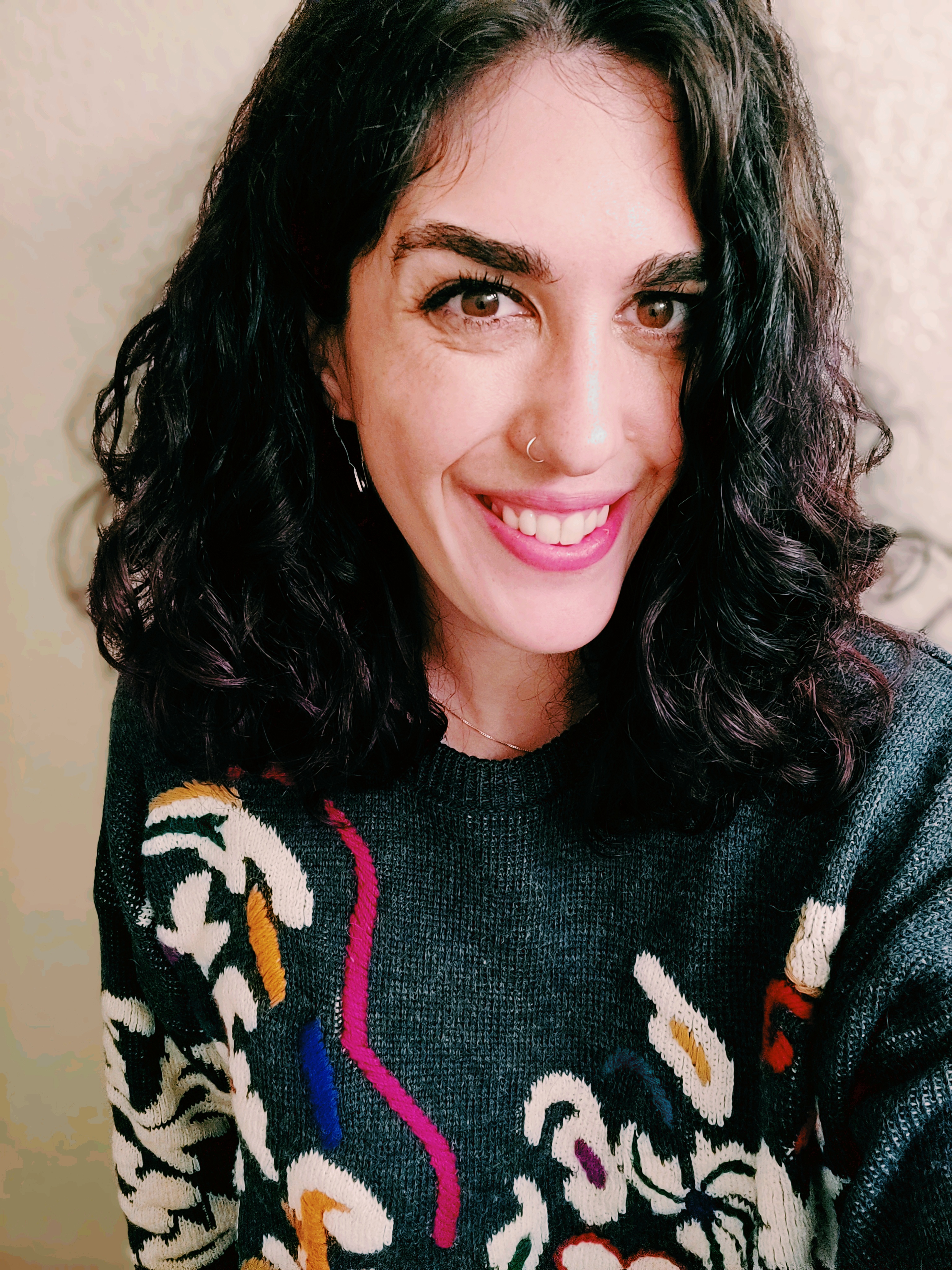
So why am I writing at length so candidly about this, on a post with a couple of selfies showing off my hair?
Because I’m not ashamed anymore. At all. I don’t care what anyone thinks about my illness. For a myriad of reasons, I don’t believe in before + after photos, especially when it comes to eating disorders, but I’m more than fine telling you that my hair looks way better than it did two years ago. I look better, too. You can tell I’m not a shell of a person anymore. Eating food when you’re hungry works wonders! Who knew?
And in my first NEDA Week reflection, what can I say about my progress? It’s imperfect, but so much of the battle against anorexia (at least for me) is against perfectionism. I am not perfect, and my recovery won’t be, either.
In the past year, and especially in the past six months, I have been trying to make peace with my healthier self. I am trying not to romanticize the pictures or memories or clothes I bought when I was clearly ill; I am trying to love the body I have now, every part of it, to honor it for how it has helped me survive that eating disorder, as well as trauma, depression, pregnancy and serious pregnancy complications, emergency surgery, the death of my child, miscarriage, grief, a pandemic. Life.
My hair is now back to its former glory. I cut it and dyed part of it purple because I’ve always wanted to, and I now try to listen to what I want. I spent over three years depriving myself of nourishment, and I’ve ignored desires and needs — from the basic to the essential — for much of my adult life. So now, I get big tattoos. I dye my hair. I cook food I love, full of veggies and delicious flavors. I experiment beyond my safe foods, and within the past two months, have found joy in preparing food for myself and my family after not really cooking in almost three full years. I let myself have ice cream again. I make appointments I’m terrified to go to. I can now conceive of a future where I am as gentle and compassionate with myself as I am with my loved ones.
I do all of this not because I yet believe I deserve to, but because I am trying to believe that. Today, I want to love something about myself and share it with the world. Today, I want you to know you can do that, too.
***
Like any other person, I expect my life will continue to be full of joys and sorrows. The way I see it, I can feel both of those (and so many other things!) more deeply if I change my perception of what makes me, specifically, worthy of genuinely feeling it all. What does make me worthy? Is it safety, real or imagined? Is it perfection, or the appearance of it? Is it control, when so much is and always will be chaos?
I think the answer is as obvious as my illness was: I was worthy before and during anorexia. I am worthy now. I didn’t have to do anything to earn it. My world outside of the eating disorder is much scarier, but my god, it’s so much wider. It’s full of opportunity and kindness. It’s full of options. It’s full of laughter, and energy, and the possibility that one day, I will sit down to eat breakfast just because I want it, and not because I know I need it.
I am grateful to be here. I’m grateful if you read this first post in a project that will be about much more than eating disorders. In treatment, we talk a lot about values as a way to understand if we’re living in tune with our eating disorders or with ourselves. One of my top three values is connection. That’s why I choose to be vulnerable and honest: because I believe it’s the only way to heal shame, and because there’s a chance it might help somebody else, whether they struggle with disordered eating or not.
It’s the vulnerability and honesty of others that has inspired me, more often than not, to talk about things I never would have had the courage to open up about otherwise. When we start unpacking our boxes of darkness, it’s often painful and always easier not to. But the point isn’t the darkness.
The point is what comes after.
 box of darkness